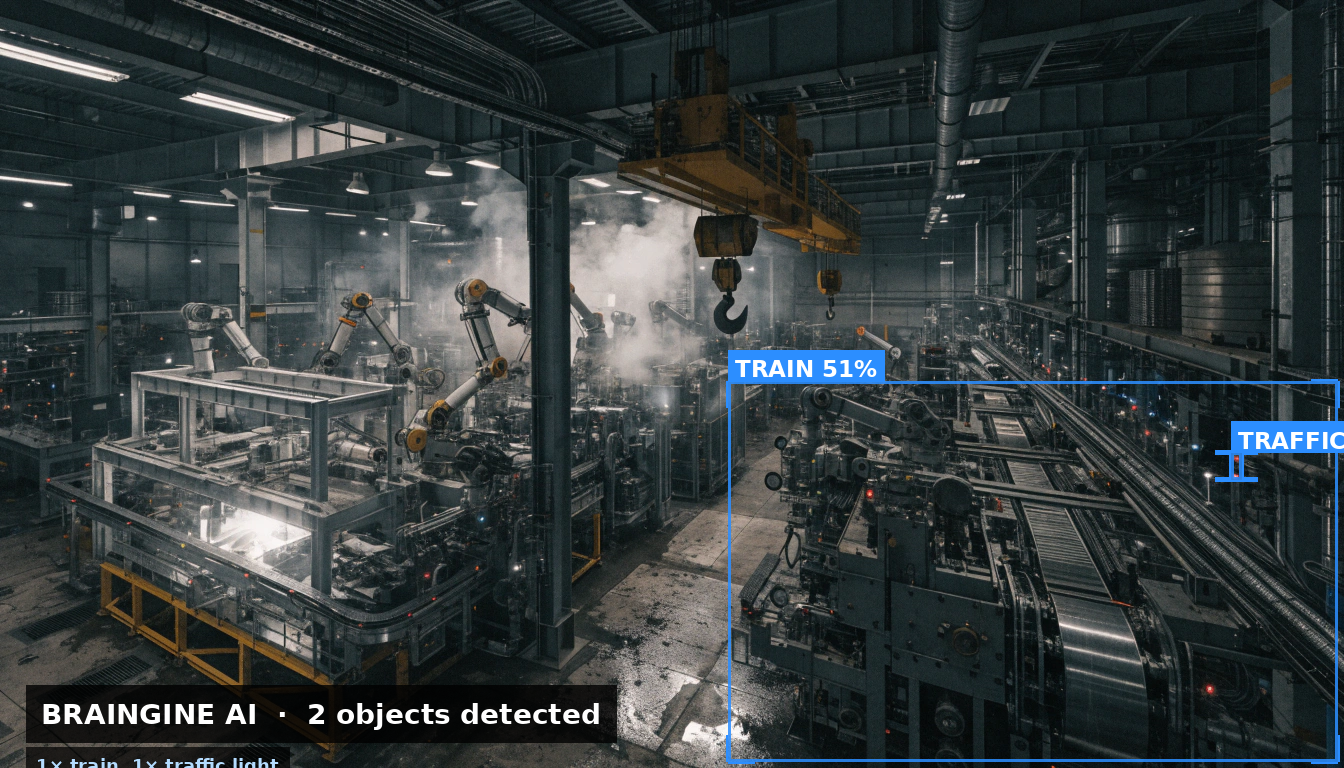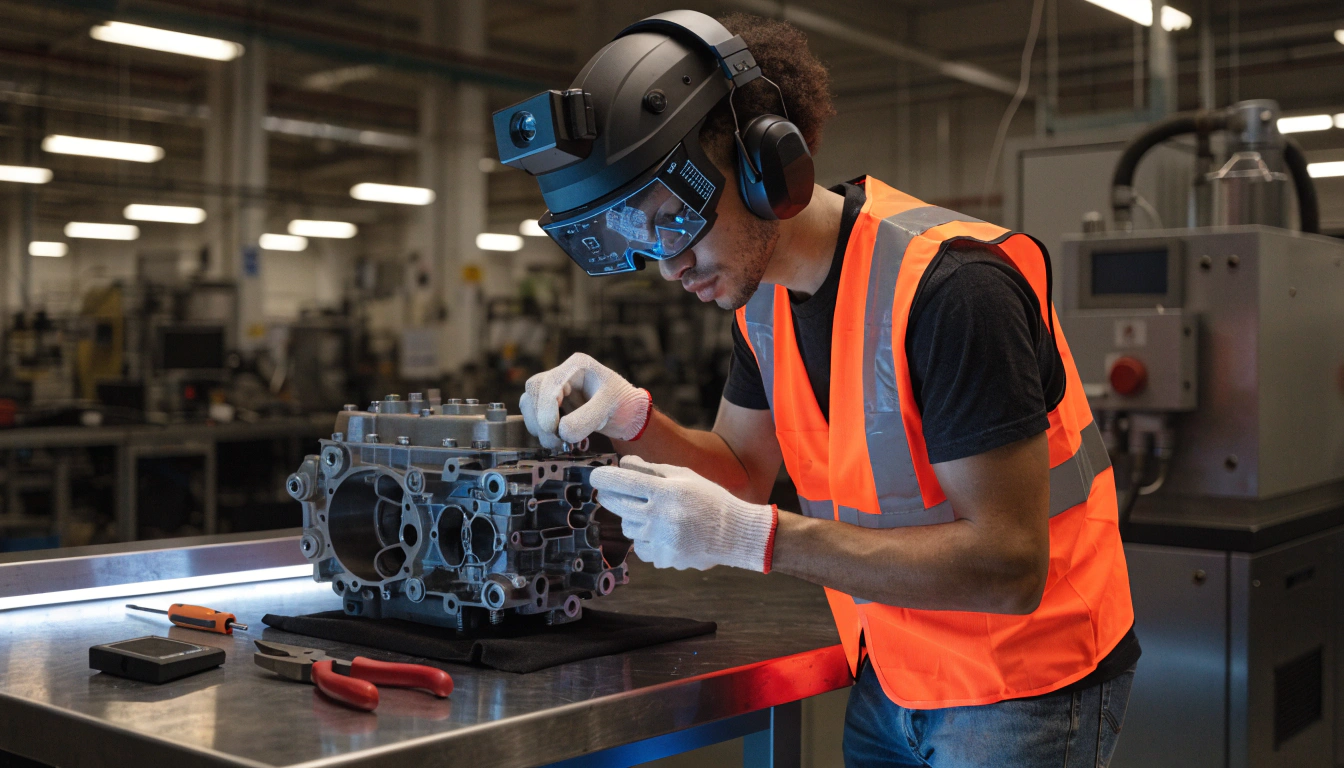
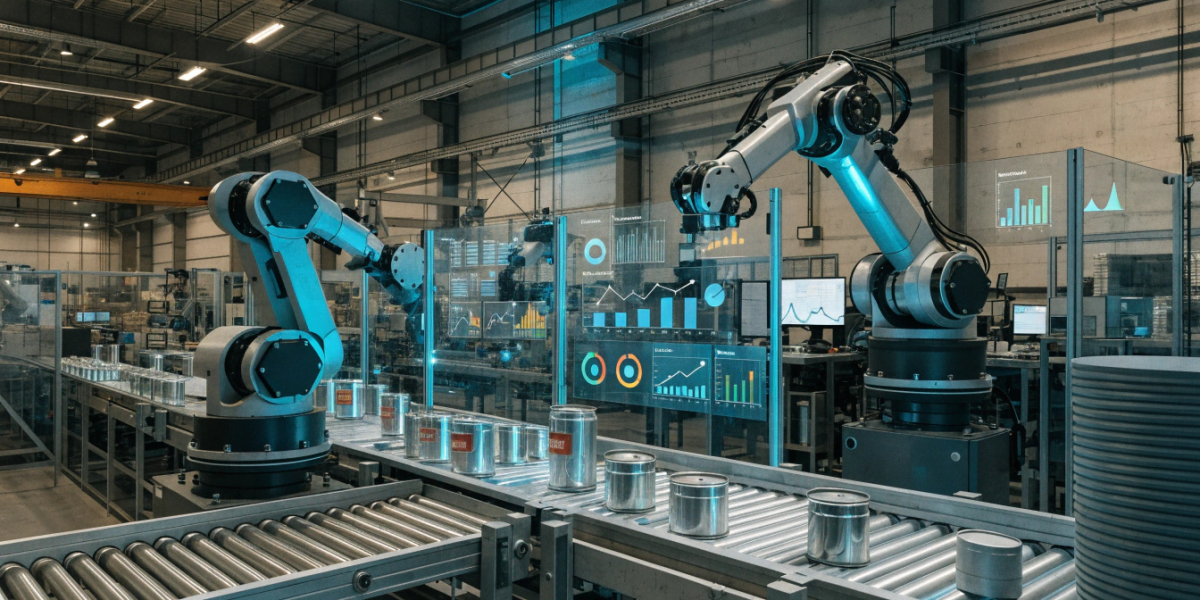
Manufacturing floors are rich with sensors and starved of insight. The data is there — in cameras, PLCs, MES systems, and the heads of experienced operators. What’s missing is the layer that turns it into actionable intelligence in real time, without a multi-year integration project. That’s what AI-powered operational intelligence is finally delivering.
The four challenges every manufacturer recognizes
- Legacy manufacturing processes that resist instrumentation
- High maintenance costs driven by reactive (not predictive) repair
- Limited predictive capabilities — anomalies caught too late
- Worker safety concerns that manual audits can’t keep up with
Every one of those is solvable with AI applied to data the plant already produces. The question isn’t whether AI works in manufacturing — it’s how fast you can put it into production.
Where AI moves the needle
Production optimization
- Predictive maintenance — catch failures days before they shut a line down
- Quality control automation — defect detection at line speed, not at sample-based intervals
- Equipment performance monitoring — utilization and OEE based on what cameras actually see
- Process efficiency enhancement — cycle-time analytics that highlight the bottleneck instantly
Workforce management
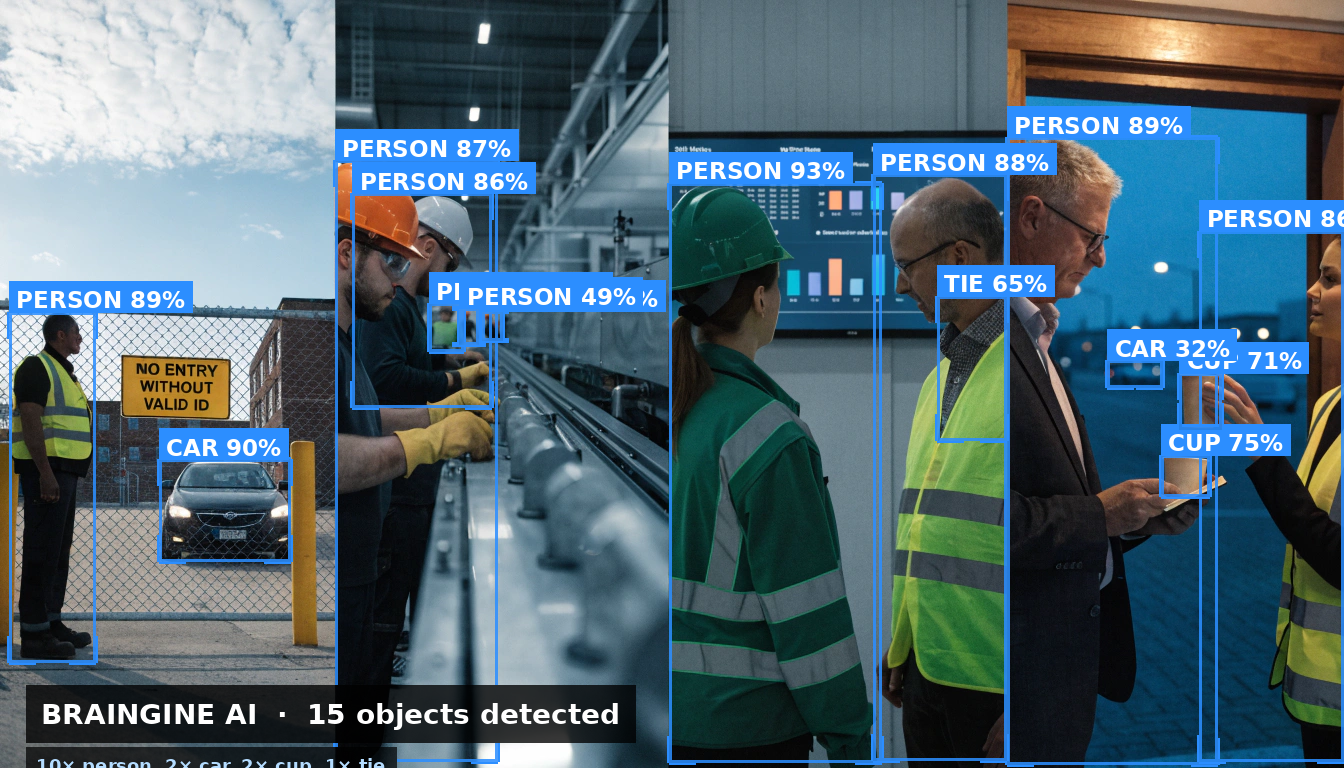
- Safety compliance tracking — PPE, safe zones, and lockout/tagout monitored continuously
- Worker performance analytics — fair, objective signals based on tasks completed, not subjective observation
- Skill gap identification — where training is missing, with the evidence to back it up
- Training optimization — refine onboarding from the patterns of experienced operators
What the benchmarks look like
- Equipment downtime reduction: 35-45%
- Quality control accuracy: +28-38%
- Operational efficiency: +25-35%
- Annual cost savings: $1.9M – $2.7M per program
These numbers come from Braingine deployments running across multiple production facilities — not pilot lines, but production-grade systems handling real shift volume.
The technology under the hood
- Edge computing architecture — millisecond inference at the line, not seconds in the cloud
- Computer vision technologies — 500+ pre-trained CNN models tuned for industrial use cases
- OpenVINO integration — production-ready acceleration on Intel hardware you likely already have
- Ethical AI implementation — EU AI Pact alignment matters when AI touches worker data
Use cases that produce fast value
Production intelligence
- Real-time line monitoring
- Defect prediction
- Process optimization
- Continuous improvement analytics
Safety and compliance
- Worker safety tracking — with ErgoGuard for continuous REBA scoring
- Process compliance monitoring
- Risk mitigation
- Incident prevention
Deployment without the multi-year project
Average deployment time on a production line is 5-30 days. ROI lands in 3-6 months. Technical complexity is “low — no coding required.” That last point is the differentiator: line engineers, not data scientists, can configure rules and monitor results.
Read more about how this works in 5-Day Implementation and the MasterMind engine that powers it.
Where this is going
The emerging trends across our manufacturing customer base: autonomous manufacturing, predictive supply chain, AI-driven innovation in product and process design, and sustainable manufacturing practices. The differentiator isn’t the future-state vision — it’s how quickly an organization can put AI into production today.
Where to start
- Start with critical production lines — biggest signal, biggest stakes
- Prioritize safety and efficiency outcomes that align stakeholders
- Develop a data collection strategy that doesn’t require IT to backfill years of history
- Ensure cross-departmental alignment between production, maintenance, EHS, and IT
- Build a continuous improvement framework from day one
Talk to us about deploying Braingine on one of your production lines — and seeing these benchmarks against your own baseline.